
Structure and functions of the extracellular space (ECS) in the brain
Department of Anatomy and Cell Biology
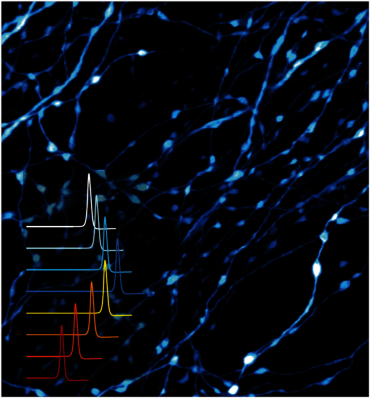
The extracellular space (ECS) forms the microscopically fine environment filled with interstitial fluid between the cells in the brain. It is essential for homeostasis, signal transmission and metabolic processes in the nervous tissue. Until now, the complex three-dimensional network of the ECS could only be insufficiently visualized in the living brain - a central research challenge of Prof. Nägerl and his team.
With the development of the Super-Resolution Shadow Imaging (SUSHI) method, it is now possible for the first time to image the ECS in living brain tissue in high resolution. SUSHI is based on 3D STED microscopy combined with fluorescence labeling of the interstitial fluid. This produces high-contrast, detailed images that represent the ECS as a “negative image” of the cellular structures. This avoids the artifacts of classical fixation and allows dynamic investigations of the interactions between cells and their environment in real time.
The Nägerl team aims to transfer SUSHI to the intact brain in vivo - using a “cranial window” - in order to investigate the dynamics of the ECS in different brain regions (e.g. cerebral cortex, hippocampus) and states (sleep, attention, drug effects) in the long term and under physiological conditions. Biophysical properties will be measured using novel biosensors and the data integrated into models in order to better understand diffusion processes and the effect of drugs in the ECS. New insights into the mobility and migration of cells and their processes in brain tissue are also expected.
In addition, SUSHI will be combined with neurophysiological techniques such as patch-clamp and 2-photon glutamate uncaging to investigate the relationship between ECS structure and neuronal function in living brain slices
This might also interest you